What the State Fair of Texas Can Teach Employers About Building a Reliable Temporary Workforce
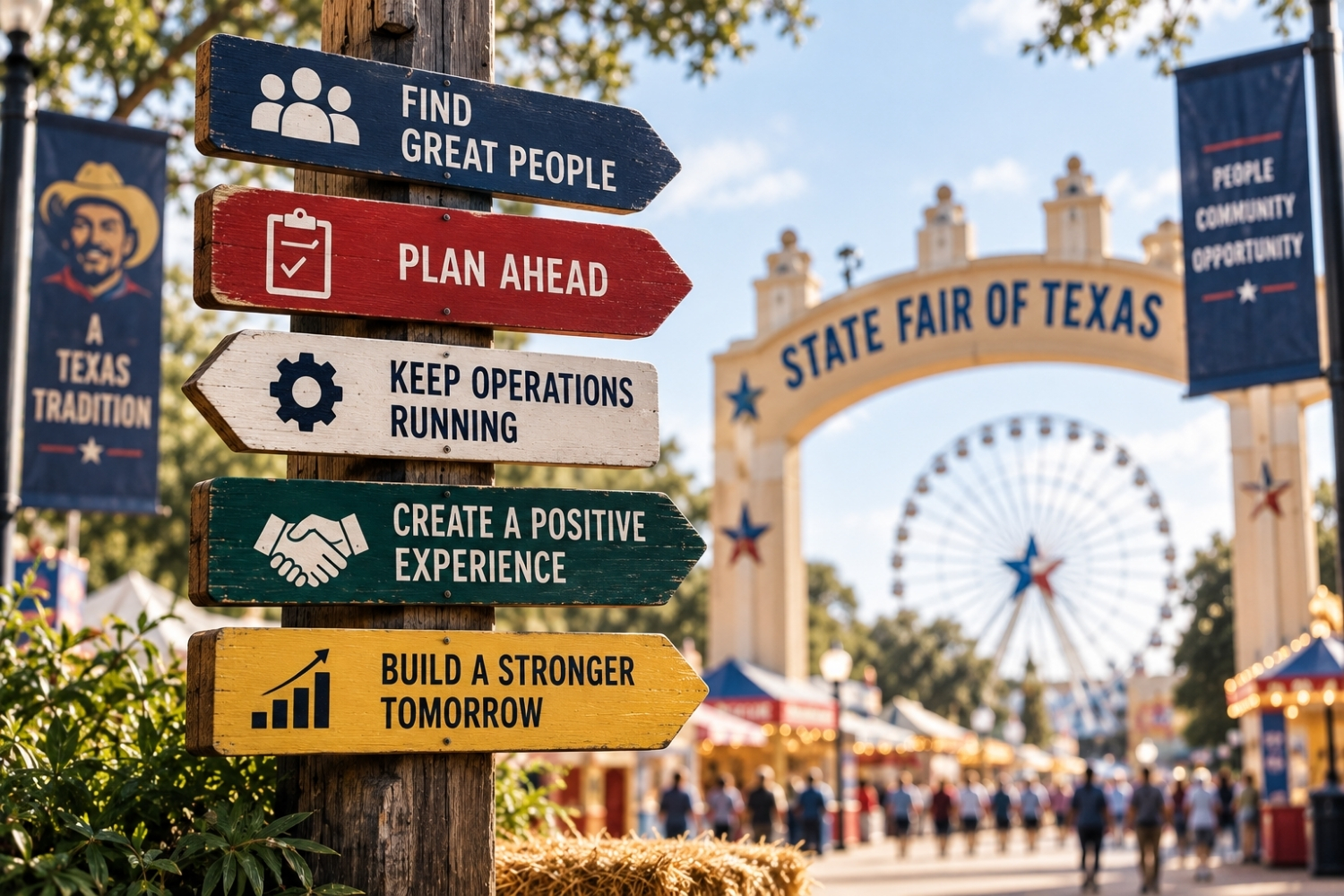
For visitors, the State Fair of Texas is food, exhibits, entertainment, and tradition. For the people running an event of that scale, it’s also a major workforce operation.
The 2026 State Fair runs for 24 days, from September 25 through October 18. Its seasonal workforce supports functions ranging from guest services and gates to maintenance and other operational needs.
Most employers aren’t staffing a 24-day fair. But many face a smaller version of the same challenge: How do you bring additional people into an operation quickly and still deliver dependable service?
Whether you’re preparing for a convention, corporate event, seasonal demand, product launch, inventory project, or another short-term business need, large events offer useful workforce lessons.
1. Start Staffing Before the Need Becomes Urgent
Temporary staffing works best when it is planned, not improvised.
Major events know their dates well in advance. Employers should take the same approach whenever possible by identifying expected headcount, shifts, responsibilities, required skills, and backup needs before demand peaks.
Waiting until the week of an event or project can limit the available talent pool and leave less time for screening and preparation.
Practical takeaway: Work backward from the date you need people fully productive, not simply the date you need them to arrive.
2. Hire for the Work People Will Actually Perform
A large event needs more than “event staff.” Different responsibilities require different strengths.
Someone greeting attendees needs strong communication and customer-service skills. Registration support requires organization and attention to detail. Setup and breakdown may require physical stamina and careful execution. Team leads need the ability to solve problems and keep others on track.
The same principle applies outside events. Temporary workers are more effective when employers define what success looks like for each assignment instead of treating contingent labor as interchangeable.
Practical takeaway: Build the role around the work, then recruit for the skills and temperament that work requires.
3. Make Fast Onboarding a Priority
Short assignments leave little room for a long learning curve.
Temporary employees need to understand where to report, who supervises them, what is expected, how schedules and breaks work, and where to go when something unexpected happens.
A simple pre-shift briefing, written instructions, clear escalation process, and designated point of contact can prevent confusion once activity increases.
Practical takeaway: Don’t mistake a short assignment for a simple assignment. Good onboarding still matters.
4. Plan for Reliability, Not Just Headcount
Having 20 names on a schedule isn’t the same as having a dependable 20-person team.
Callouts, schedule changes, transportation issues, changing attendance, and unexpected workload can create gaps quickly. Employers should determine in advance how they will handle absences and changing demand.
That may mean maintaining backup coverage, cross-training workers, staggering shifts, or working with a staffing partner that can help manage workforce changes.
Practical takeaway: Build flexibility into the staffing plan before you need it.
5. Remember That Temporary Employees Represent Your Organization
For a guest, customer, attendee, or client, the distinction between a permanent employee and a temporary worker often doesn’t matter.
The person answering a question, checking someone in, directing traffic, or resolving a problem is representing the organization in that moment.
That’s why fit matters even for short assignments. Reliability is essential, but communication, professionalism, judgment, and service orientation can be just as important.
Temporary Staffing Is Really Workforce Planning
High-volume events make the lesson easy to see: successful temporary staffing isn’t simply about finding extra people.
It requires planning, role clarity, screening, onboarding, communication, and enough flexibility to respond when circumstances change.
Those same principles apply across Texas businesses facing seasonal peaks, special projects, conferences, conventions, and other short-term workforce demands.