10 Interview Questions Hiring Managers Should Ask (And What to Listen for in the Answers)
A strong resume can tell you where a candidate has worked and what they’ve accomplished. But an effective interview should help you understand something more important: how that person approaches challenges, works with others, and contributes to a team.
For hiring managers, asking the right questions can make the difference between selecting someone who interviews well and identifying someone who can succeed in the role.
Whether you’re interviewing an accountant, executive assistant, HR professional, IT specialist, or department leader, a thoughtful interview process helps you move beyond first impressions and make more informed hiring decisions.
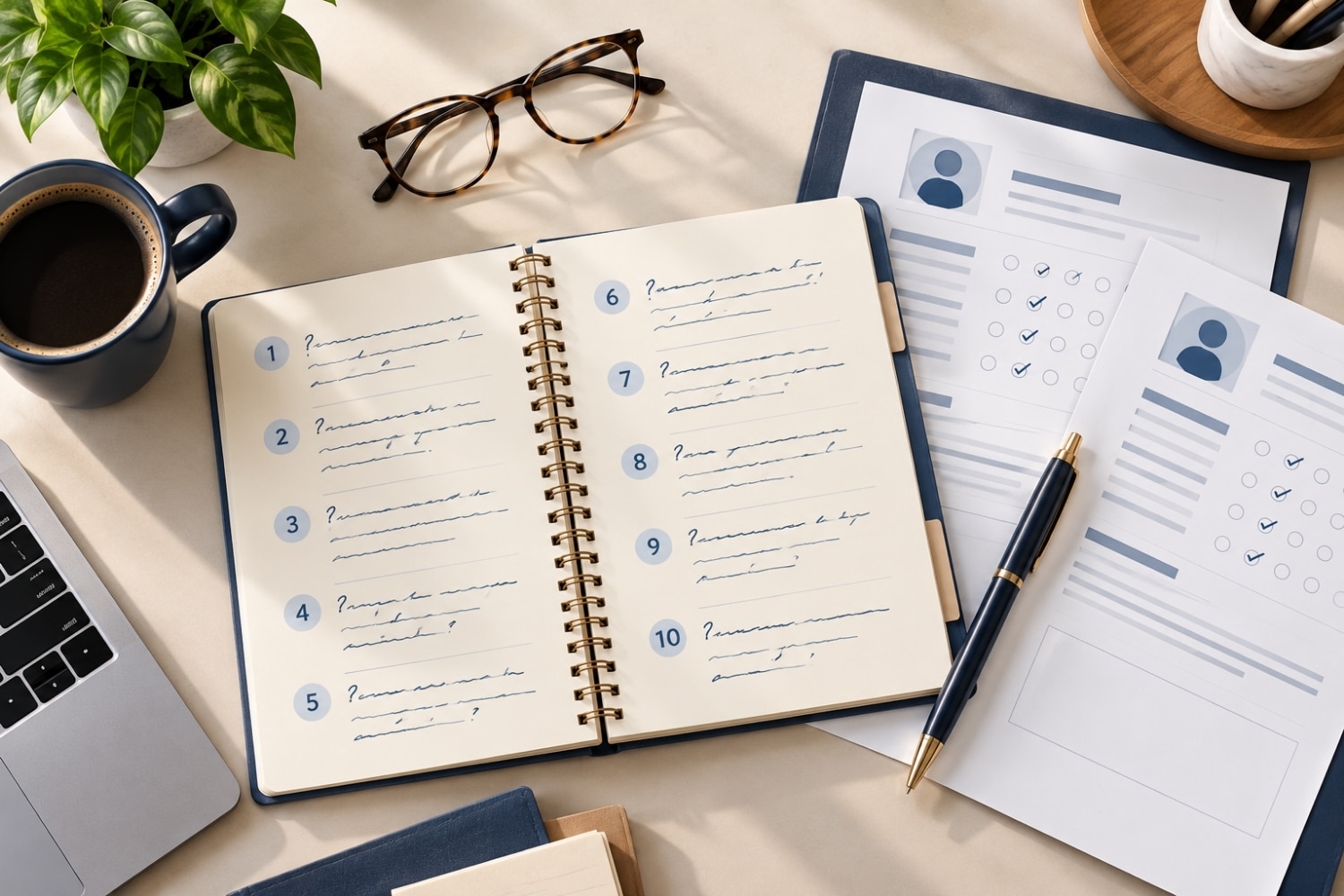
Here are 10 practical interview questions employers can use, along with what to listen for in each answer.
1. Ask Questions That Reveal How Candidates Actually Work
Behavioral interview questions encourage candidates to share examples from their professional experience. Instead of relying on hypothetical answers, hiring managers can better understand how candidates have handled real situations.
Question 1: “Tell me about a time you had to solve a difficult problem at work. How did you approach it?”
What to listen for: Look for a clear explanation of the problem, the candidate’s specific responsibilities, the steps they took, and the outcome.
Strong answers demonstrate problem-solving ability, sound judgment, and accountability. Pay attention to whether the candidate can explain their individual contribution rather than only describing what the team accomplished.
Question 2: “Describe a time you had to manage competing priorities or tight deadlines.”
What to listen for: Effective candidates should be able to explain how they organized their workload, communicated expectations, and adjusted when priorities changed.
This question is particularly useful for administrative, accounting, customer service, and project management positions where employees regularly balance multiple responsibilities.
Question 3: “Tell me about a time something didn’t go as planned. What did you learn?”
What to listen for: Look for honesty, ownership, and a willingness to improve.
A candidate who can acknowledge a mistake, explain how they addressed it, and describe what they would do differently may demonstrate stronger professional maturity than someone who claims everything has always gone smoothly.
2. Evaluate Communication and Collaboration Skills
Technical qualifications matter, but employees also need to communicate effectively, manage relationships, and work with different personalities.
Question 4: “Can you share an example of working with someone whose communication style was different from yours?”
What to listen for: Candidates should demonstrate flexibility, professionalism, and the ability to adjust their approach.
Listen for examples of active listening, clear communication, and productive collaboration rather than complaints about difficult coworkers.
Question 5: “Tell me about a time you received constructive feedback. How did you respond?”
What to listen for: Strong answers show openness to feedback and a willingness to make meaningful improvements.
Consider whether the candidate can describe a specific change they made after receiving feedback.
Question 6: “How do you keep your manager or team informed when a project is falling behind schedule?”
What to listen for: Look for proactive communication, transparency, and problem-solving.
Candidates who recognize potential issues early and communicate realistic solutions can be valuable in roles requiring coordination across departments.
For example, an accounting professional might need to communicate a reporting delay, while an IT specialist may need to explain a technical issue to a nontechnical manager.
3. Understand Motivation, Adaptability, and Long-Term Fit
Hiring managers should also consider whether the opportunity aligns with a candidate’s professional interests, preferred working environment, and future goals.
Question 7: “What attracted you to this position, and which responsibilities interest you most?”
What to listen for: Look for an understanding of the position and a genuine connection between the candidate’s interests, qualifications, and the work involved.
A thoughtful answer should go beyond wanting a new job or a higher salary.
Question 8: “Tell me about a time you had to learn a new system, process, or skill quickly.”
What to listen for: Candidates should explain how they approached learning, what resources they used, and how they applied their new knowledge.
This is particularly relevant for employers implementing new technology, updating business processes, or expanding responsibilities within existing departments.
Question 9: “What type of management style and work environment helps you perform at your best?”
What to listen for: Focus on whether the candidate’s preferences align with the actual expectations and working conditions of the position.
For example, a highly independent role may require someone comfortable making decisions with limited day-to-day supervision. Other positions may involve frequent collaboration and structured guidance.
The goal isn’t to hire people who think or behave exactly like the existing team. It’s to understand whether the candidate can succeed within the role’s requirements and working environment.
Question 10: “What would you want to accomplish during your first 90 days in this position?”
What to listen for: Strong candidates may discuss learning the business, understanding expectations, building relationships, and identifying opportunities to contribute.
Their answers can also reveal how they define success and whether their expectations align with the responsibilities of the position.
4. Interview Do’s and Don’ts Every Hiring Manager Should Remember
Even excellent questions lose their value when the interview process is inconsistent or poorly organized.
A few practical habits can help employers gather more useful information while creating a professional candidate experience.
Interview Do’s
- Prepare before the interview. Review the job description, identify the most important qualifications, and decide what each question should evaluate.
- Ask consistent core questions. Using the same job-related questions for candidates interviewing for the same position makes comparisons more meaningful.
- Encourage specific examples. When answers are vague, ask follow-up questions such as, “What was your specific role?” or “What happened as a result?”
- Take objective notes. Document examples of relevant skills, experience, and accomplishments rather than relying on memory.
- Explain the position accurately. Discuss responsibilities, expectations, team structure, and potential challenges so candidates can make informed decisions.
Interview Don’ts
- Don’t dominate the conversation. Give candidates enough time to explain their experiences and ask questions.
- Don’t make decisions based solely on first impressions. A polished presentation doesn’t always demonstrate the strongest job-related qualifications.
- Don’t ask questions about protected personal characteristics. Keep questions focused on the candidate’s qualifications and ability to perform the job.
- Don’t confuse confidence with competence. Look for demonstrated skills and relevant examples, not simply the most persuasive answer.
- Don’t leave candidates uncertain about next steps. Communicate the anticipated timeline and follow through when possible.
5. Turn Interview Answers Into Better Hiring Decisions
Asking good questions is only part of an effective interview process. Employers also need a consistent way to evaluate what they’ve learned.
Before interviewing, identify three to five competencies that matter most for the position. These might include technical expertise, problem-solving, communication, adaptability, or leadership. Then, use a simple evaluation scale to assess each candidate against those requirements.
For example, a hiring manager interviewing for a senior accounting position might evaluate:
- Technical knowledge: Can the candidate explain relevant accounting processes and reporting responsibilities?
- Problem-solving: Can they identify and resolve discrepancies independently?
- Communication: Can they explain financial information to colleagues outside the accounting department?
- Accountability: Do they demonstrate ownership of deadlines, accuracy, and results?
Documenting these observations makes it easier to compare candidates based on evidence rather than general impressions.
It’s also important to recognize that not every interview question will be equally relevant to every position. Employers should adapt their questions to the responsibilities and level of the role while maintaining consistent evaluation standards for candidates being considered for the same opening.
Better Interviews Start With Better Questions
An effective interview should do more than confirm what’s already listed on a resume. It should help employers understand how candidates think, communicate, solve problems, and approach their responsibilities.
By preparing thoughtful questions, listening for specific examples, and evaluating candidates consistently, hiring managers can make more confident decisions while providing a better experience for everyone involved
At Burnett Specialists, we work with employers across Texas to understand their hiring needs, identify qualified professionals, and support better hiring decisions across a wide range of specialties.
If your team is preparing for interviews or hiring for a critical position, contact Burnett Specialists to discuss how our recruiting team can help.